Today is our last Urban Survival lesson. We have written an evaluation for the course:
During this element I learnt a lot of new knowledge which I was not aware of before. Including the food we eat, where our food comes from, how our cities work etc. Before the food project, I never knew it was really hard to find food from locally producing farms. Nowadays these small local farms are being pushed out of the market by bigger food companies, selling cheap processed meat. Whenever I now go to the supermarket, I look at where the food has come from, which company has supplied it, whether or not it is organic, and also the price. Usually organic food is more expensive than processed and sprayed in pesticides.
Tuesday, January 21, 2014

Photos

These are two different types of mint. Spearmint and peppermint.

Tea tree

We think this is a type of beetle. The black seeds they are lying in, is their poo. The poo is very good for putting in soil.


Lavender

Tomato from the garden. It was one of the freshest tomatoes I have had.
Tuesday, January 14, 2014
City Sustainability - Bicycle lanes
One of the many aspects of urban survival is coming up with ideas on how the city can become more sustainable. We have watched a video, which outlines some of the sustainable changes other cities have come up with. We choose one of these and decide whether we think that Hong Kong could adopt this sustainability method.
 Many people like to cycle to work or places around town, but this can be very difficult if there are lot's of people on the sidewalk and dangerous traffic on the roads. There are also people who cycle for training/competitions. These people mostly do it in the mornings before work, because that is the time of day when traffic is the least.

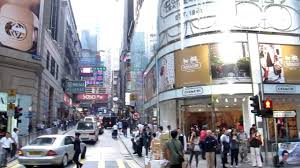 However, this environmental idea of bicycles has its limits. Many studies showed that in fact having more bicycle lanes increases the rate of pollution! Since the bicycle lanes take up a lot of space, there will be less space for other cars and busses to go on, this way when the day is at its peak rush hour, if there are no bicycles left, many of the cars will be congested in the limited space they have. In Hong Kong, there is a lot of cars and pollution, this could affect the cyclists, which are cycling right next to a trafficked road.

Some of the many sustainable methods we learnt about were:
- Urban farming - some towns have set up a community farm where everyone can contribute, grow and eat. They also sell their products at markets.
restricted parking - people would rather choose to take public transport
- bicycle lanes
- rebuilding cities - parts of Paris was rebuilt so as to make the homes and buildings more sustainable.
- Transportation - many cities have improved their transportation so that it is environmentally friendlier.
- Increasing taxes in cars - people don’t want to buy cars, because it is so expensive.
In many European countries, cities have set up bicycle lanes from where cyclists are separated from traffic. They are being increasingly set up in other big cities such as, New York City, Melbourne, Vancouver, Ottawa, Toronto and San Francisco.
 Many people like to cycle to work or places around town, but this can be very difficult if there are lot's of people on the sidewalk and dangerous traffic on the roads. There are also people who cycle for training/competitions. These people mostly do it in the mornings before work, because that is the time of day when traffic is the least.
The bicycle lane is set up so that the pedestrian lane is on the outside, then it is the bicycle lane, then depending on where it is, it is either a buffer between bicycle lane and vehicular. Or a lane for parked cars. This prevents cyclists from getting hurt or run over by cars.
Advantages:
- Minimizes traffic - more people bike to work because it is easier and not dangerous.
- Less pollution - less people are using cars and taxis, which means less pollution.
- Less traffic - not as noisy and chaotic as before. Since more people are biking, less people need to take buses and taxis.
- People get more exercise - it is a fun and easy way to exercise, because a lot of people, especially in Hong Kong, don’t have much time to go to the gym or go for a run. Biking to work will take about the same time as taking a bus or taxi.
Disadvantages:
One of the disadvantages of adding bicycle lanes to cities is that, often roads in cities are quite small and there might not be space for adding them. In Hong Kong there is not much space, but a lot of traffic. It is also hard for people to store a bike. Most people have small apartments with not much space.
In some cities, governments have set up bike racks in almost every street where you can rent a bike. This means that you don't have to buy your own one and it is accessible and convenient for everyone. This also helps minimize traffic because since bicycles are smaller and lighter than most of the vehicles, this helps the traffic congestion rate. This can also help the air pollution because bicycles don't actually omit any greenhouse gasses.
Tuesday, December 17, 2013
City Sustainability
What do cities need?
Where does Hong Kong get its food from?
Effects of city Growth
- noise
- pollution
- over-crowded
- population increase
- rich culture
- increase in waste
- less money
- transportation problems
- relying on strangers (other locals)
Urbanology - Urban Survival simulation game
Urbanology is a very practical and realistic game that provides a series of realistic economy situations in which the player has to act as the head of the government and make a decision of yes or no.
Questions are very good in a sense that it is very realistic and provokes the player to think theoretically and rationally about real life situations, this makes the player realize the questions the economy faces every day and learns how to tackle the questions in society.
 However some of the negative factors of this game include the lack of graphics making this activity "game-like", some of the younger players in this game will find this too grown-up, even boring. Simply because it isn't much of a game, no real optimum goal achieved.
Questions are very good in a sense that it is very realistic and provokes the player to think theoretically and rationally about real life situations, this makes the player realize the questions the economy faces every day and learns how to tackle the questions in society.

Sunday, December 15, 2013
Building a City - enercities and urban planning game
This week we were asked to play four games similar to sim city. Each game had something to do with building or sustaining a city. They were all different, some were good, whilst some were bad. Each had their own ups and downs. I really enjoyed playing some of these games, but some were a bit boring.
I am going to talk about the positives and negatives of 2 of the games which we played: enercities and urban planning game.


Positive -
- entertaining
- good graphics
Negative -
- no way to refill natural resources
- natural resources run out quickly
I actually really enjoyed this game. There was a woman in the corner who gave advice and helped us. You had to make sure to keep the citizens happy by building residential away from factories and by building entertainment for them. You also have to build up the economy so that there is money for the city to function and be an environmental and sustainable city.
The biggest let down of this game is probably the fact that your natural resources run out quite quickly and there is no way to refill them. The highest level on this game is 5, I only got up to level 3 before I had no more natural resources left. Since I had no more natural resources, the buildings stopped working and i was not allowed to play anymore.

Positive -
- learns about budgeting
Negative -
- Bad graphics
- boring
- nothing happens during the game
Urban planning game was really boring. I didn't notice that the instructions were under the game, so i just randomly put anything anywhere. I didn't finish the game, because it was too boring. The only good thing about this game, was that you realize that every city has a budget and you need to keep within it.
In the game it was important to place all the industry related buildings and anything that makes noise, away from residential areas. This is because people don't like to live next to a loud factory.
Overall I enjoyed enercities the most from all four of the games. There is one problem they all have and that is that you start building the city from the beginning. This is not very realistic as nowadays cities don't start from scratch, but rather replace old buildings or expand around the old city. Therefore it is harder for cities to become more sustainable as they would have to replace a lot or build around the old structures.


Subscribe to:
Comments (Atom)